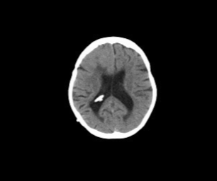
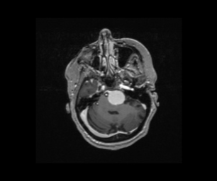
QuadGAN is a novel 8-neural-network generative AI framework that translates brain scans bidirectionally between CT and MRI — producing 4 diverse outputs per input for clinician selection, with no paired training data required.
A multi-domain generative AI framework enabling simultaneous, unpaired image translation across four imaging domains — a first in medical AI.
Four independent U-Net generators with identical architecture but divergent learned weights produce 4 diverse outputs per input — giving clinicians multiple options to choose the most diagnostically accurate result.
Simultaneous CT→MRI and MRI→CT translation across four domains (CT, Primary MRI, Auxiliary MRI, Auxiliary CT) using redundant cyclic supervision and multi-scale adversarial learning.
Operates entirely on unpaired CT and MRI datasets — eliminating the need for matched patient scans, which are rarely available in clinical practice. Cycle-consistency loss ensures anatomical fidelity.
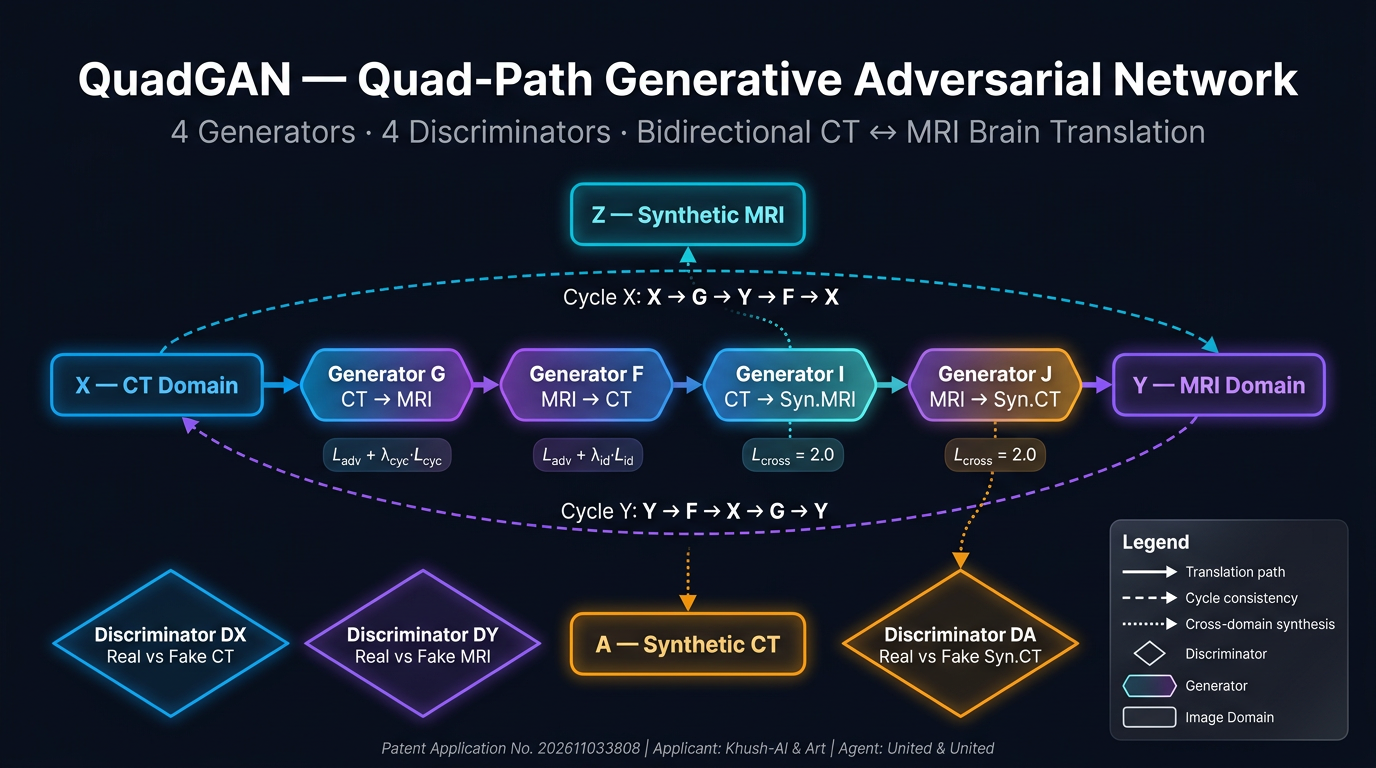
Four generators and four discriminators working in concert through redundant cyclic supervision and cross-cycle consistency constraints.
High λcyc prioritizes anatomical preservation — critical in medical imaging where hallucinated anatomy is clinically dangerous.
Applied to all outputs post-generation for clinical-grade image quality.
QuadGAN outperforms standard CycleGAN across all perceptual and clinically relevant metrics, validated through rigorous statistical analysis.
A comprehensive review of 35+ studies (2015–2025) informed the QuadGAN design. The framework directly addresses limitations identified across the literature: narrow one-to-one modality mappings, poor generalization to diverse datasets, and lack of multi-parametric sequence support. QuadGAN's multi-domain approach represents a significant architectural leap beyond existing CycleGAN variants.
Experience real-time CT ↔ MRI translation powered by QuadGAN. Both directions are available — try the live conversion tool hosted on our platform.
Powered by Khush-AI & Art · Patent 202611033808
A novel Quad-Path GAN with 4 generators (G, F, I, J) and 4 discriminators (DX, DY, DZ, DA) enabling simultaneous bidirectional translation across CT, MRI, Synthetic MRI and Synthetic CT domains — with cycle-consistency and cross-domain synthesis paths.
Figure 1. QuadGAN Architecture Diagram · Patent Application No. 202611033808 · Applicant: Khush-AI & Art · Attorney: United & United
Download DiagramQuadGAN creates value across the entire healthcare and research ecosystem — from bedside to boardroom.
Receive 4 candidate synthetic images per scan and select the most diagnostically appropriate output. Reduce patient radiation exposure and scan costs.
Deploy QuadGAN in resource-limited settings where MRI access is restricted. Synthesize missing modalities from available scans to support multi-modal workflows.
Patent-filed technology (Application 202611033808) by Khush-AI & Art targeting a multi-billion dollar medical imaging AI market. Scalable, modality-agnostic architecture.
Potentially avoid repeat scans when one modality is unavailable or contraindicated. Benefit from faster diagnosis and reduced healthcare costs through AI-synthesized imaging.
A novel multi-domain GAN architecture with full technical documentation. Validated against 35+ prior studies. Open for collaborative research, citation, and extension.
Whether you're a clinician, researcher, investor, or patient advocate — we invite you to join the QuadGAN journey.
Four generators with identical U-Net architecture but divergent learned weights, providing multiple conversion options for a single input image.
Normalization method that processes each patient scan independently, preserving patient-specific intensity characteristics and improving generalization.
Regularization method applying dropout only to the first three decoder layers at 50% rate, balancing overfitting prevention with spatial precision.
Training methodology that intentionally stops at 13% completion to optimize the trade-off between quality, diversity, and training time.
Whether you're a clinician, researcher, investor, or patient advocate — we want to hear from you. Help us bring QuadGAN from prototype to clinical reality.
Partner with us on clinical validation studies, dataset expansion, and publication.
Support the transition from research prototype to clinical-grade medical AI product.
Pilot QuadGAN in your hospital or imaging center and provide real-world feedback.